

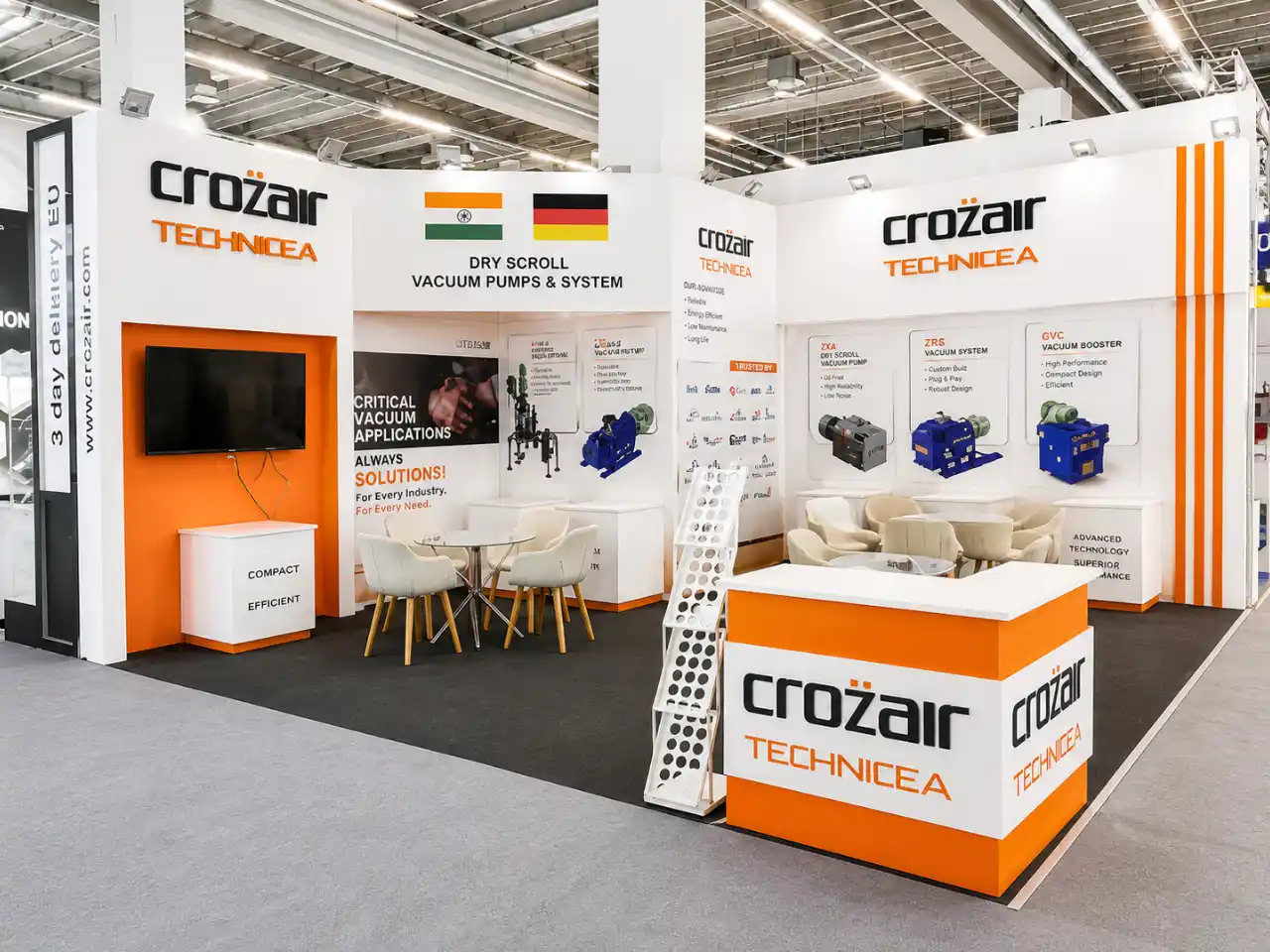
Trade shows across Europe are exciting, loud, busy, and tightly regulated. If you're planning to exhibit, exhibition stand Builder in Europe is not a phrase you can afford to ignore. Miss a rule, and your stand may never open. Or worse, it opens and creates a safety risk.
This guide breaks down EU exhibition safety standards in plain language. No legal fog. No filler. A focused breakdown of critical requirements, their purpose, and compliance steps.
Let's begin.
What Are Exhibition Stand Regulations in Europe?
Exhibition stand regulations in Europe are a mix of:
EU-wide safety laws
National building and fire codes
Venue-specific technical rules
Together, they define how a stand must be designed, built, wired, and operated.
There is no single "European exhibition law." From a practical standpoint, compliance is governed by European trade show regulations, EN standards, and local enforcement.
The logic is similar to driving in Europe. Same road principles. Different speed limits.
Why Safety Standards Matter at European Trade Shows
European venues don't treat safety as a box-ticking exercise. They treat it as a duty of care.
Here's why enforcement is strict:
Tens of thousands of visitors move through halls daily
Temporary structures carry real structural load
Fire risk rises with lighting, fabrics, and crowds
Electrical failures can shut down entire halls
Most venues will inspect stands before opening. If something looks off, they stop working. No debate.
Is saving one day of prep really worth missing the show?
Structural Safety Requirements for Exhibition Stands
Structural safety is the first thing inspectors check.
Load & Stability Rules
All stands must:
Support expected structural load.
Resist horizontal force (people leaning, wind from HVAC).
Remain stable without relying on neighboring stands.
Double-deck stands face stricter scrutiny. Calculations are often mandatory.
Height Limits
Typical hall rules include:
Single-storey: 4–6 metres.
Double-deck: approval required above 4 metres.
Hanging elements: venue-specific limits.
Always check the venue technical manual. Guessing is risky.
Engineering Proof
For complex builds, venues may request:
Structural calculations.
Engineer sign-off.
EN standard compliance documents.
This falls under exhibition stand design Europe, not optional paperwork.
Fire Safety Regulations for Exhibition Booths
Fire rules are non-negotiable. Every European venue enforces them.
Fire Retardant Materials
All visible materials must be:
Fire retardant
Certified to EN standards
Documented with test reports
Common requirements include EN 13501 or DIN 4102 (Germany).
No certificate?
Material gets removed.
Emergency Access
Stands must never block:
Aisles
Fire exits
Fire extinguishers
Alarm points
Even decorative elements can trigger a violation.
Open Flames & Heat Sources
Generally prohibited unless approved in writing.
This includes:
Cooking demos.
Candles.
Open heating elements.
Expect strict limits under exhibition stand safety requirements EU.
Electrical Safety Standards in Europe
Electrical issues cause more delays than any other factor.
Certification Rules
All electrical systems must:
Follow EU low-voltage directives.
Use CE marking on components.
Be installed by certified electricians.
Temporary wiring still needs certification.
On-Site Inspection
Before power goes live, venues may check:
Cable routing.
Load calculations.
Grounding.
Distribution boards.
Improvised fixes don't pass.
This is a core part of trade show booth regulations Europe.
Materials & Sustainability Rules
Sustainability is no longer a "nice to have."
Restricted Materials
Many venues restrict or ban:
Untreated wood.
Polystyrene foam.
PVC-heavy graphics.
Why?
Fire risk and waste.
Waste & Reuse Policies
Expect rules on:
Packaging disposal.
Reusable structures.
End-of-show waste removal.
Some countries enforce penalties for non-compliance.
This is now embedded into regulations for exhibition stands in Europe.
Documents Required for Stand Approval
Paperwork matters as much as the build.
Most venues require submission of:
Technical drawings.
Risk assessment.
Fire certificates for materials.
Structural calculations (if applicable).
Electrical certification.
Deadlines are strict. Miss them, and approval slips.
Pro tip: submit early. Review cycles take time.
Who Is Responsible for Compliance?
This is where many exhibitors get confused.
The Short Answer
Everyone involved shares responsibility.
In Practice
Exhibitor: overall duty of care.
Stand builder: design and construction compliance.
Venue: enforcement and final approval.
If something fails, liability doesn't disappear. It spreads.
Clear contracts help. So does choosing experienced partners.
Country-Specific Variations
EU rules set the baseline. Countries add layers.
Germany
Extremely strict on fire safety.
DIN standards widely used.
Paperwork-heavy approval process.
German venues inspect thoroughly. No shortcuts.
France
Strong focus on fire classification.
Electrical checks are detailed.
French-language documents are often required.
Expect formal processes.
Italy
Structural checks vary by venue.
Fire rules are enforced, but interpretation can differ.
Local engineers often requested.
Plan buffer time.
Spain
Regional differences.
Fire rules are consistent, enforcement varies.
Sustainability rules gaining momentum.
Local knowledge helps.
UK
No longer under EU law, but aligned.
BS standards instead of EN in some cases.
Risk assessments taken seriously.
UK venues are practical but firm.
Common Compliance Mistakes
Most problems are avoidable.
Here are the usual culprits:
Missing fire certificates.
Late document submission.
Non-certified electrical work.
Overheight structures.
Blocking emergency routes.
Notice a pattern?
It's rarely the design. It's the details.
Quick Compliance Checklist
Use this before every European show:
Design
Height within limits.
Structural load calculated.
No reliance on adjacent stands.
Materials
Fire retardant materials used.
Certificates available.
Electrical
CE-marked components.
Certified installation.
Documents
Drawings submitted on time.
Risk assessment completed.
Venue technical manual followed.
On-Site
Clear aisles and exits.
Final inspection passed.
Simple list. Big impact.
FAQs
1. Are exhibition stand regulations the same across Europe?
No. EU exhibition safety standards provide a base, but national and venue rules differ.
2. Do small stands need compliance documents?
Yes. Size does not remove legal responsibility.
3. What happens if a stand fails inspection?
Work stops until issues are fixed. In severe cases, the stand stays closed.
4.Are double-deck stands allowed everywhere?
Not always. Approval depends on venue and engineering proof.
5. Who checks compliance on-site?
Venue-appointed inspectors and safety officers.
Final Thoughts
European exhibitions reward preparation and punish guesswork. Regulations are strict because the risks are real. Structural failure, fire hazards, and electrical faults don't care about deadlines.
Working with professional exhibition stand builders who understand European compliance does more than tick boxes. It reduces risk, avoids last-minute stress, and saves time where it matters most, on the show floor.
And that's the real win.